

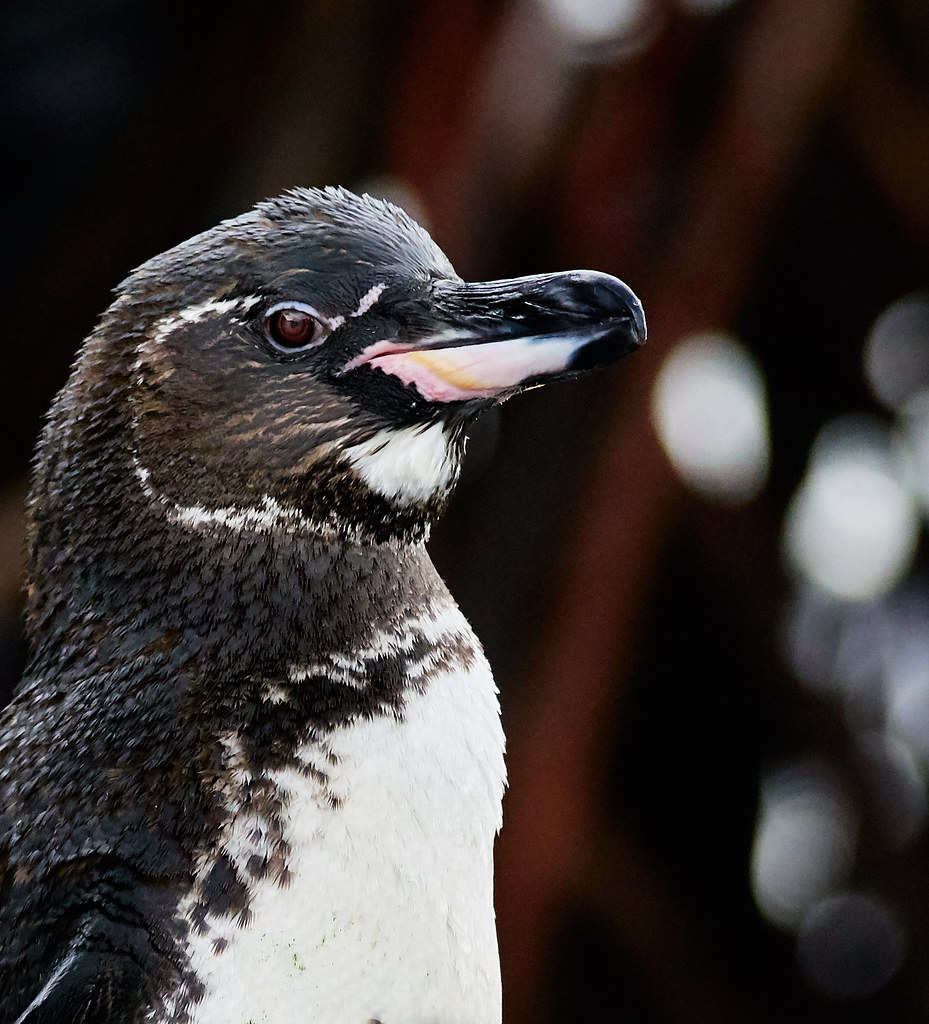
I’m always interested to see how penguins worldwide are faring, especially since it can be hard to determine which penguin species are most at risk. Most of the time, I live in an African penguin bubble, only researching similar species when I can’t find anything relevant to my own research.
However, I recently stumbled across a rare gem – the International Union for Conservation Species Survival Commission (IUCN SSC) created a Penguin Specialist Group (PSG) to assess species most at risk and identify conservation needs. The paper they published considers all 18 species of penguins, making it unique.
The experts used a systematic approach to identify the biggest threats to penguins, then determined the most vulnerable penguins based on unanimous votes [1]. The PSG declared that three species are “international priorities” that require immediate conservation action: the African, Yellow-eyed, and Galapagos penguin (above) [1].
For African penguins, the PSG recommended implementing fishery management throughout the penguins’ range, as it currently covers some of their breeding grounds but not the range of wandering juveniles [1]. The PSG suggested the management of fisheries, removal of invasive predators, and creation of predator-free breeding sites to aid the Galapagos penguin [1]. Their most important advice for Yellow-eyed penguins is to start tourism planning and using marine resources sustainably [1].
For all penguins, the PSG hopes to promote seasonal fishery closures and overall management. They also highlight the need for more long-term research, especially in the non-breeding season, when penguin mortality rates are highest [1].
Finally, the PSG emphasizes the importance of researchers communicating with others outside the scientific community [1]. Many scientists take their data and publish a paper, but this approach alone isn’t enough to bring about change. Scientists must team up with nongovernmental organizations, legislators, stakeholders, and managers to turn their conservation ideas into action. The future of penguins depends on it.
References:
- Boersma, P., Borboroglu, P.G., Gownaris, N., Bost, C., Chiaradia, A., Ellis, S., Schneider, T., Seddon, P., Simeone, A., Trathan, P., Waller, L. and Wienecke, B. (2020), Applying science to pressing conservation needs for penguins. Conservation Biology, 34: 103-112. doi:10.1111/cobi.13378.
CCC
 The Penguin Researcher